

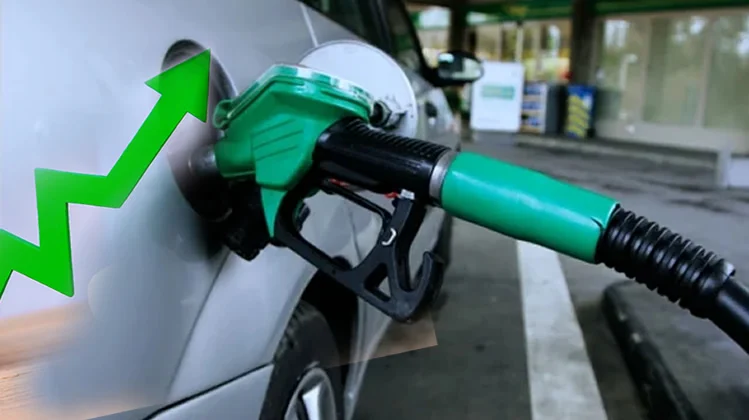
Nigeria's petrol prices went up big time in March. The National Bureau of Statistics says the average price hit ₦1,288.54 per litre, up from ₦1,051.47 in February. That's a 22.55 percent jump in just one month.
If you live in Lagos, Ogun, or Kaduna, you got a bit lucky. Those states had the lowest prices at around ₦1,162 to ₦1,193 per litre. But if you're in Anambra, Sokoto, or Borno, you paid more. Anambra topped the list at ₦1,441.22 per litre. The North-East zone overall had the highest prices at ₦1,336.50.
It wasn't just petrol that hurt your pocket. Diesel prices climbed 16 percent month-on-month, going from ₦1,420.17 in February to ₦1,648.08 in March. Year-on-year, diesel went up 3.05 percent. Ebonyi State felt it worst, with diesel hitting ₦2,262.29 per litre.
Cooking gas prices also jumped. A 5kg cylinder went from ₦6,799.18 in February to ₦7,655.73 in March. That's a 12.60 percent increase. The 12.5kg cylinder jumped even harder, from ₦16,997.94 to ₦19,652.83 (a 15.62 percent spike). Kaduna residents are paying the most for cooking gas. Bauchi has the cheapest.
Compare it to last year and the picture's still rough. Petrol was ₦1,261.65 in March 2025, so you're paying about 2.13 percent more than twelve months ago. Cooking gas prices are up 4.55 to 6.48 percent year-on-year depending on cylinder size.
These increases matter because they ripple through everything. Transport costs go up, food prices follow, and everyday living gets harder. For young Nigerians already stretching their budgets, March 2026 was a tough month at the pump and the kitchen.